Aquaculture Permitting: How to Keep Regulatory Approvals From Stalling Your Timeline
Quick answer
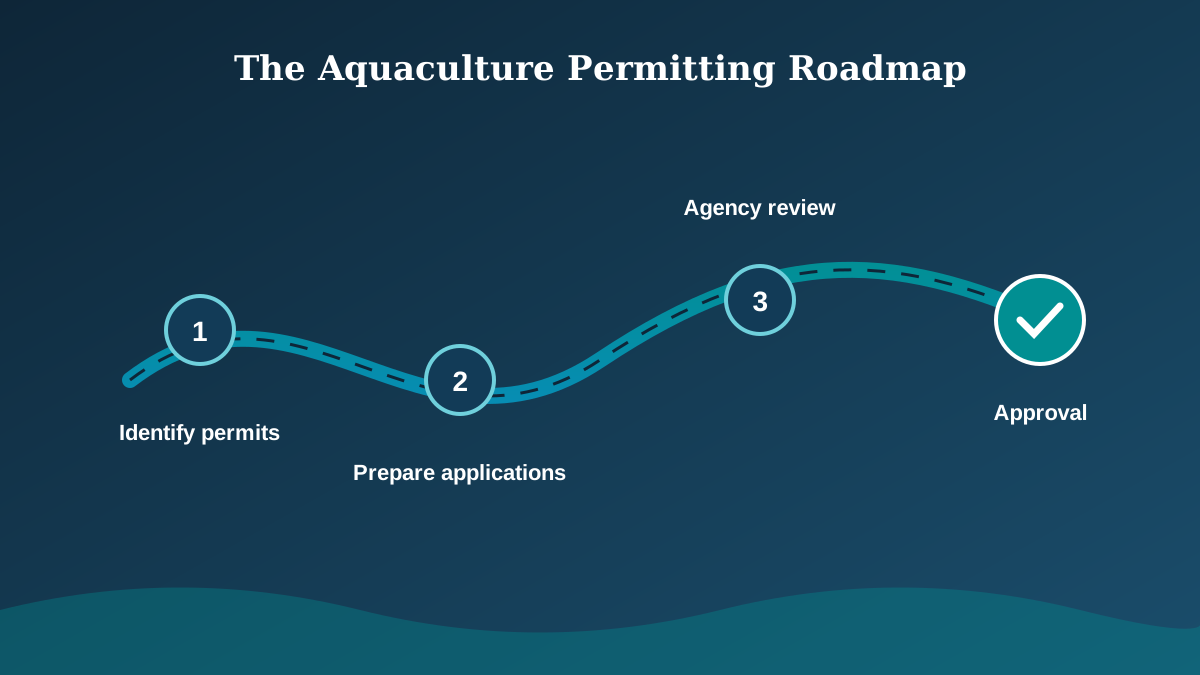
Aquaculture permitting requirements vary by country, state or province, site, system, and species, and approvals can take longer than construction. To keep your timeline on track: identify every required permit early, learn what each agency needs to see, sequence applications alongside design and financing, build review time into your schedule, and talk to regulators before you apply.
Why does permitting delay aquaculture projects?
Permits are often treated as a box to tick once the design is done. In practice, several agencies may be involved, each with its own requirements and review times, and one missing approval can stop construction or stocking. Because permitting sits on the critical path, it deserves attention from the very start of feasibility.
What permits does a fish farm typically need?
Requirements differ everywhere, so always confirm with the relevant authorities. Common categories include:
- Land use and zoning: confirming aquaculture is allowed at the site.
- Building and construction permits for structures, electrical, and plumbing.
- Water use or withdrawal permits for wells or surface water.
- Wastewater and effluent discharge permits covering where and how water leaves the farm.
- Aquaculture registration or licensing. In Florida, for example, commercial aquaculture producers register with the Florida Department of Agriculture and Consumer Services and follow its aquaculture best management practices.
- Species, import, and animal health permits for moving or importing juveniles, broodstock, or eggs.
- Environmental reviews, especially for coastal and sea cage sites.
Five steps to keep approvals on schedule
- Map every permit early. During planning, list every approval the project needs, the agency responsible, what they require, and typical review times.
- Talk to regulators before you apply. Early conversations surface concerns while the design can still change easily.
- Sequence permits with design and financing. Some applications need design details; some lenders need permits in hand. Plan the order deliberately.
- Submit complete, well-supported applications. Incomplete applications are a common cause of delay. Clear drawings, water plans, and production plans help reviewers say yes.
- Build review time into the schedule and budget. Put permitting milestones in your construction timeline and business plan, with contingency.
How is permitting different for international projects?
Every country has its own framework, and some projects involve both national and local authorities. With recent projects in the United States, Mexico, Canada, Africa, and Australia, we've seen how much requirements differ. Local expertise and early engagement matter even more.
Get help with aquaculture permitting
We help clients identify which permits apply, prepare what agencies need, and keep approvals moving alongside system design and financing. See our regulatory approvals and permits service, read why early input saves time, or schedule a consultation.
Frequently asked questions
What permits do I need to start a fish farm?
It depends on your location, site, system, and species. Common categories include zoning, building permits, water use permits, wastewater discharge permits, aquaculture registration or licensing, species and animal health permits, and environmental review.
How long does aquaculture permitting take?
It varies widely by jurisdiction and project, and can take longer than construction. Mapping every required permit early and building review time into the schedule is the best way to avoid delays.
Does a land-based RAS farm need a discharge permit?
Often, depending on the volume and destination of its wastewater and local rules. Confirm with the relevant environmental authority during planning.
Can an aquaculture consultant help with permits?
Yes. A consultant can identify which permits apply, help prepare applications, and coordinate permitting with design, financing, and construction schedules.